
By Lumina Team · Published November 1, 2026
In brief
A well-made aluminum fence is built to last for decades. Aluminum does not rust or rot, so the fence’s life comes down to three things: the quality of the powder-coat finish, how well the posts were set, and simple care like an occasional rinse. Lumina backs its aluminum fence systems with a 25-year limited warranty.
If you are choosing a fence for a home you plan to keep, how long it lasts matters as much as how it looks. Wood can rot within a decade in the wrong conditions, and steel or wrought iron starts to rust as soon as the paint is chipped. Aluminum is different, and that is why it has become the first choice for modern homes across Los Angeles.
Planning a fence or gate in Los Angeles?
See every series in person at our Panorama City showroom, or send us your project details for a free quote. You can also browse our aluminum fence collection.
How long does an aluminum fence last?
A quality aluminum fence is built to last for decades. The metal itself does not wear out in normal outdoor conditions: it does not rust, rot, warp or attract termites. What changes over time is the finish, and a factory powder coat is designed to hold its color and protect the metal for many years.
The warranty is the clearest guide to what a manufacturer expects. Lumina’s aluminum fence systems carry a 25-year limited warranty. See the warranty page for the full terms.
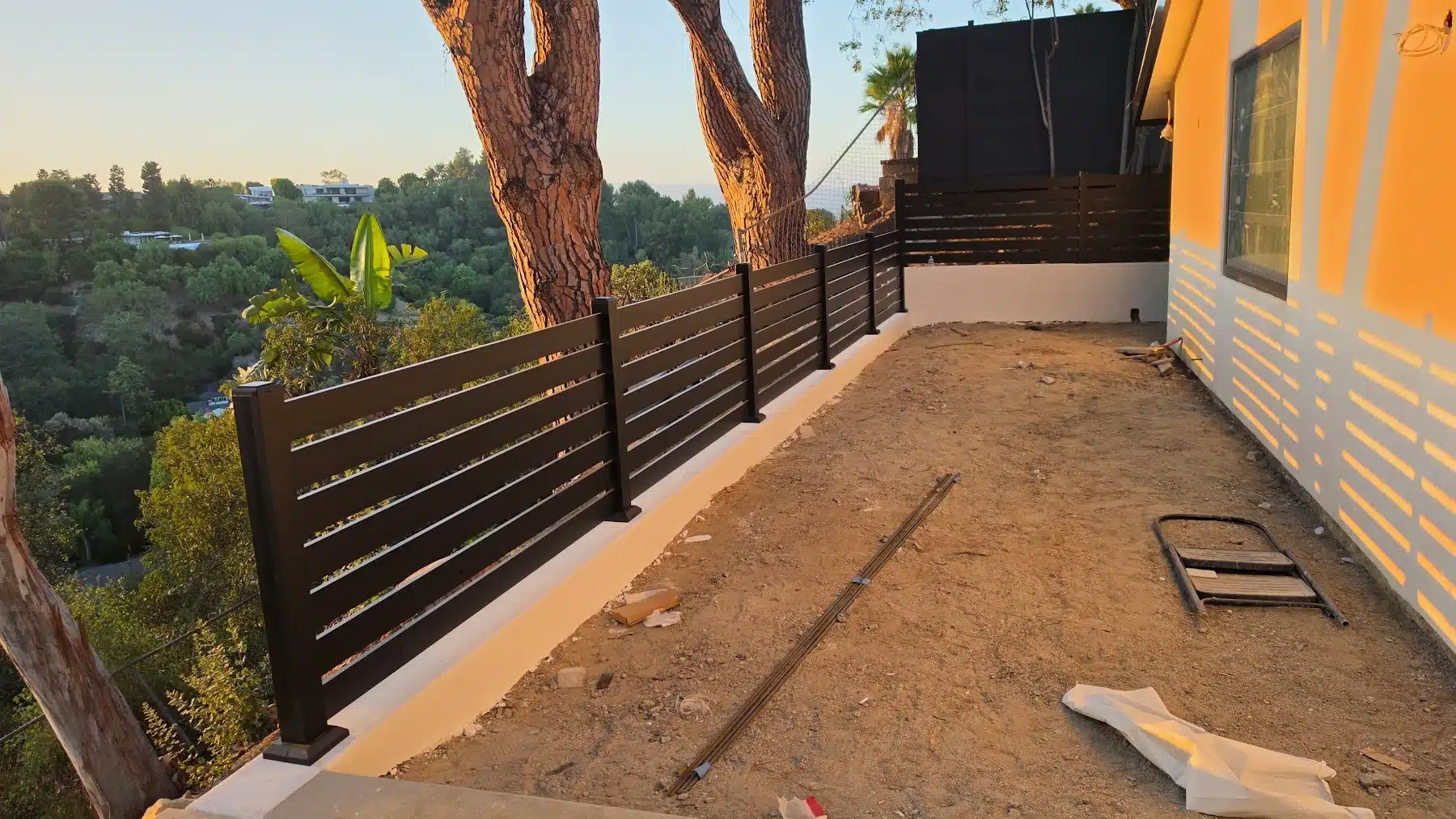
Why aluminum lasts longer than other fence materials
It cannot rust
Rust is iron oxide, and aluminum contains no iron. When aluminum meets air it forms a thin oxide layer that seals the surface and protects the metal underneath. That is why an aluminum fence can sit next to a pool, a sprinkler line or the ocean without the orange streaks you see on old iron fences. If you are weighing the two, our guide to aluminum vs wrought iron fence goes deeper.
The alloy and the finish
Lumina’s fence profiles are made from T6063 architectural aluminum, an alloy chosen for clean extruded shapes and strength. Each profile is finished with powder coating, which is baked on rather than brushed on, so it bonds to the metal and resists chipping and fading better than ordinary paint.
No rot, warping or upkeep cycle
Wood needs staining or sealing every few years and eventually rots at the posts. Vinyl can become brittle or yellow in strong sun. Aluminum needs none of that: no sanding, no staining, no repainting schedule. Our aluminum vs vinyl comparison covers the trade-offs.
| Material | Rust or rot | Regular upkeep | Finish |
|---|---|---|---|
| Aluminum | Does not rust or rot | Occasional rinse | Baked-on powder coat |
| Wrought iron / steel | Rusts where paint is damaged | Sanding and repainting | Paint |
| Wood | Can rot, attracts termites | Stain or seal every few years | Stain or paint |
| Vinyl | Does not rust | Washing | Color in the material |
What shortens the life of an aluminum fence
Aluminum is forgiving, but a few things can shorten its life or spoil the finish. Almost all of them are decided at installation.
- Poor post footings. Posts that are not set deep enough or in proper footings can lean, which strains the panels and gates. On hillsides and slopes, footing depth and drainage matter even more.
- Unrepaired scratches. Aluminum will not rust under a scratch, but an open chip lets dirt and moisture dull the finish around it. Touch it up early.
- Constant sprinkler spray. Hard water leaves mineral spots. Aim sprinklers away from the fence where you can.
- Soil and mulch against the bottom rail. Keep a small gap so the bottom of the panel can dry.
- The wrong fasteners. Plain steel screws can react with aluminum. Quality systems use stainless or coated hardware.
Aluminum fence in Los Angeles conditions
Southern California is easy on aluminum, with two things to plan for.
Sun. Strong UV is hard on wood and vinyl. A good powder coat holds its color well in direct sun, and darker, matte finishes like black and bronze tend to look best over time.
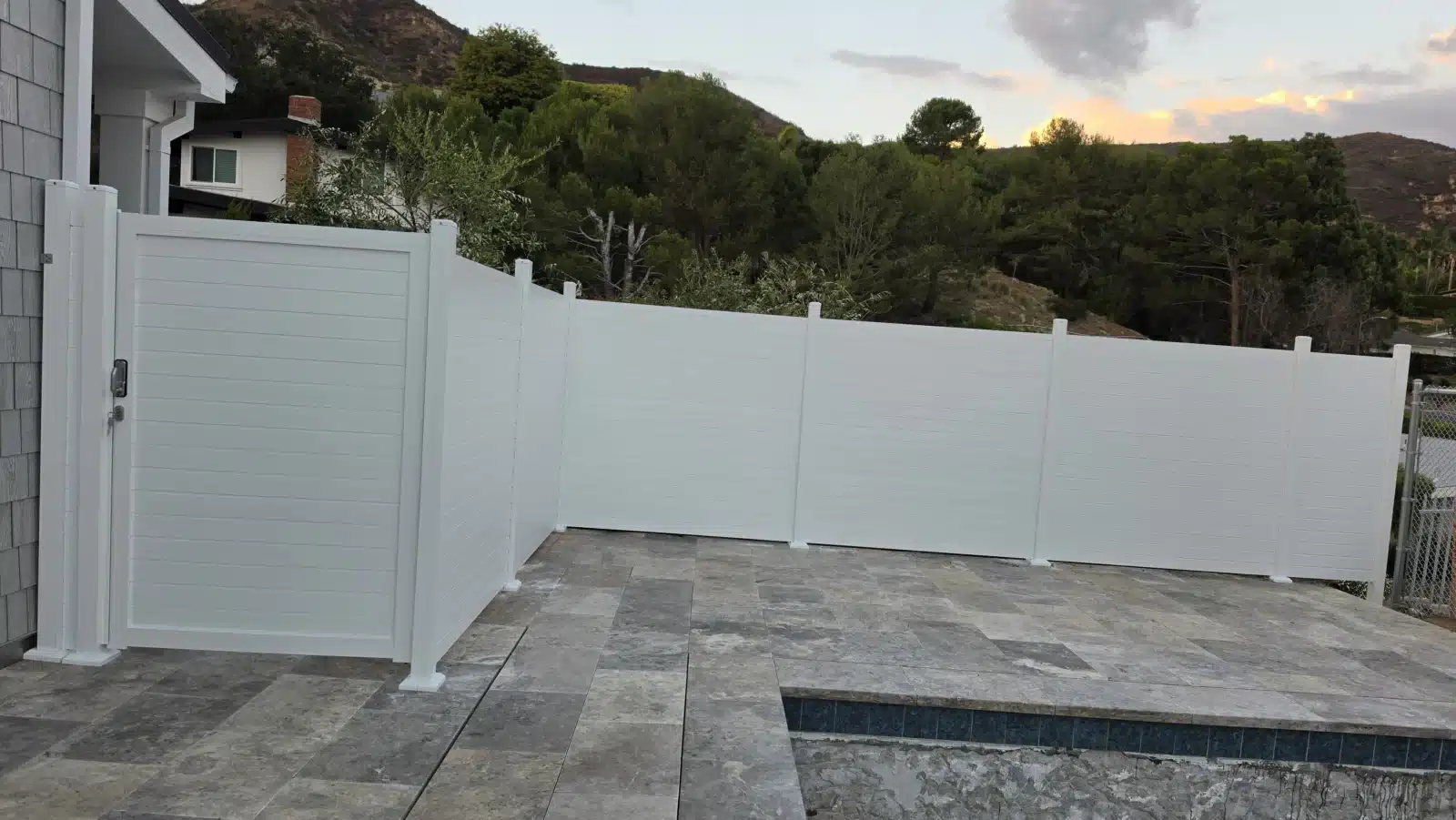
Coastal air. In Malibu, the Palisades and other coastal areas, salt settles on every outdoor surface. Aluminum will not rust, but salt left on the finish can dull it. A fresh-water rinse every few months keeps it looking new. Here is a white aluminum fence and gate we supplied for a home in Pacific Palisades.
How to make an aluminum fence last longer
- Rinse the fence with a garden hose two to four times a year, more often near the coast.
- Wash with mild soap and a soft brush if dirt builds up. Avoid abrasive pads and harsh solvents.
- Check gate hinges and latches once a year and tighten anything loose.
- Touch up scratches with matching paint as soon as you see them.
- Keep vines, shrubs and soil off the panels so they can dry.
That is the whole maintenance plan. Compared with staining a wood fence or repainting iron, it takes minutes a year.
Installation decides how long a fence lasts
The most important day in a fence’s life is the day it goes in. Post spacing, footing depth, level lines on a slope and properly hung gates all affect how the fence holds up for decades. In Los Angeles, we supply the fence and our licensed installation partners install it, with one point of contact from quote to final walkthrough. See fence and gate installation in Los Angeles, or read our guide to aluminum fence cost to plan your budget. If you are planning to do it yourself, follow our step-by-step guide on how to install an aluminum fence.
See it in person
Finish, slat spacing and hardware are easier to judge in your hand than on a screen. Visit our showroom at 14600 Arminta St, Panorama City, to compare every series and color side by side, or request a free quote for your project.
Installation quality matters as much as the material. If you are hiring someone to build your fence, see how to choose a fence contractor in Los Angeles.
Frequently asked questions
How long does an aluminum fence last?
A well-made aluminum fence with a factory powder-coat finish is built to last for decades, not years. Aluminum does not rust or rot, so its life depends mainly on the quality of the finish, how it was installed and how it is cared for. Lumina backs its aluminum fence systems with a 25-year limited warranty.
Does aluminum fence rust?
No. Aluminum does not contain iron, so it cannot rust the way steel or wrought iron does. It forms a thin oxide layer that protects the metal. The powder-coat finish adds color and a second layer of protection.
Is aluminum fence good near the coast?
Yes, aluminum is one of the best fence materials for coastal homes because it will not rust. Salt air can still dull the finish over time, so rinse the fence with fresh water every few months and wash off any salt buildup.
What shortens the life of an aluminum fence?
Deep scratches left unrepaired, posts set without proper footings, constant sprinkler spray with hard water, soil or mulch piled against the bottom rail, and steel fasteners that react with the aluminum. All of these are easy to avoid.
How do I maintain an aluminum fence?
Rinse it with a hose two to four times a year, wash with mild soap and a soft brush when needed, keep plants and soil off the panels, check gate hinges and latches, and touch up any scratches with matching paint.