
Vinyl and aluminum are the two fences people ask us about most when they want something that will not need painting. Both skip the sanding and staining that wood demands. Both look clean on day one. Where they differ is in how they handle sun, impact and time, and in how much choice they give you on privacy and style.
This guide compares an aluminum vs vinyl fence point by point: privacy, strength, climate, style, upkeep, installation and cost. It closes with a plain verdict and the questions worth asking before you buy. We sell aluminum, so we have a point of view, and we have tried to be fair about where vinyl does well.
Key takeaways
- Aluminum suits most modern homes: it will not crack or warp and holds its color in strong sun.
- Vinyl’s strength is solid privacy in white or tan, often at a lower starting price.
- Aluminum now does privacy too, with wide slat, overlapping and louvered styles.
- Wind, dogs and impact favor aluminum; a traditional look favors vinyl.
At a glance
| Aluminum fence | Vinyl fence | |
|---|---|---|
| Material | Extruded aluminum with a powder-coated finish | Hollow PVC (vinyl) profiles |
| Privacy | Open pickets, slats with gaps, or full-privacy slat styles | Usually solid panels; full privacy is its strength |
| Strength | Rigid; can dent under a hard hit but will not crack | Flexes; can crack or split on impact, especially when cold |
| Sun and heat | Powder coat holds its color in strong sun | Lighter colors stay cooler; quality varies with UV protection |
| Colors | Matte black, bronze, white and wood-grain finishes | Mostly white, tan, gray and wood-look; fewer dark options |
| Upkeep | Rinse with a hose now and then | Wash off green film and scuffs, which show on white |
| Wind | Slatted and louvered styles let air through | Solid panels catch wind like a sail |
| Look | Slim, modern lines | Bulkier rails and posts; a more traditional look |
What is the difference?
An aluminum fence is made from extruded aluminum profiles, the same metal used for window frames and boat parts, finished with a baked-on powder coat. The metal itself cannot rust, and the coating gives it color and an extra layer of protection.
A vinyl fence is made from PVC (polyvinyl chloride) pushed through a die into hollow boards, rails and posts. Better vinyl adds UV inhibitors so it holds up in the sun. Because the profiles are hollow, many installers reinforce the bottom rail or posts with metal or wood inserts on longer or taller runs.
Is vinyl the same as PVC?
Yes. “Vinyl fence” and “PVC fence” describe the same product. Vinyl is the everyday name for PVC. What changes from one brand to the next is the wall thickness, the UV additives and how the panels are reinforced, so two vinyl fences can perform very differently.
Privacy
Privacy is where vinyl built its reputation. A classic vinyl privacy fence is a solid wall of tongue-and-groove boards, and it blocks the view completely.
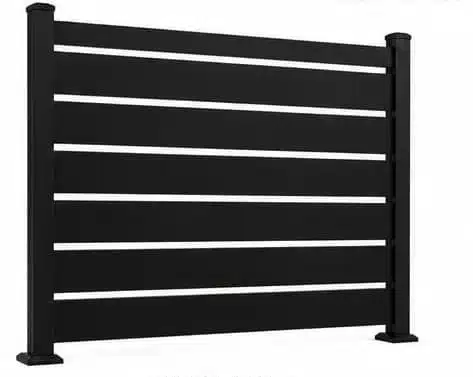
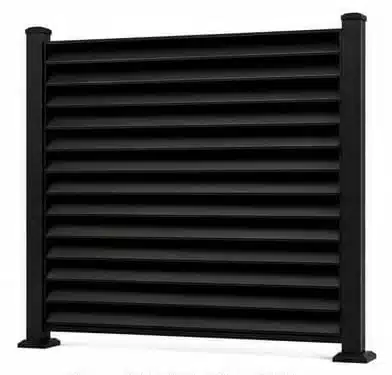
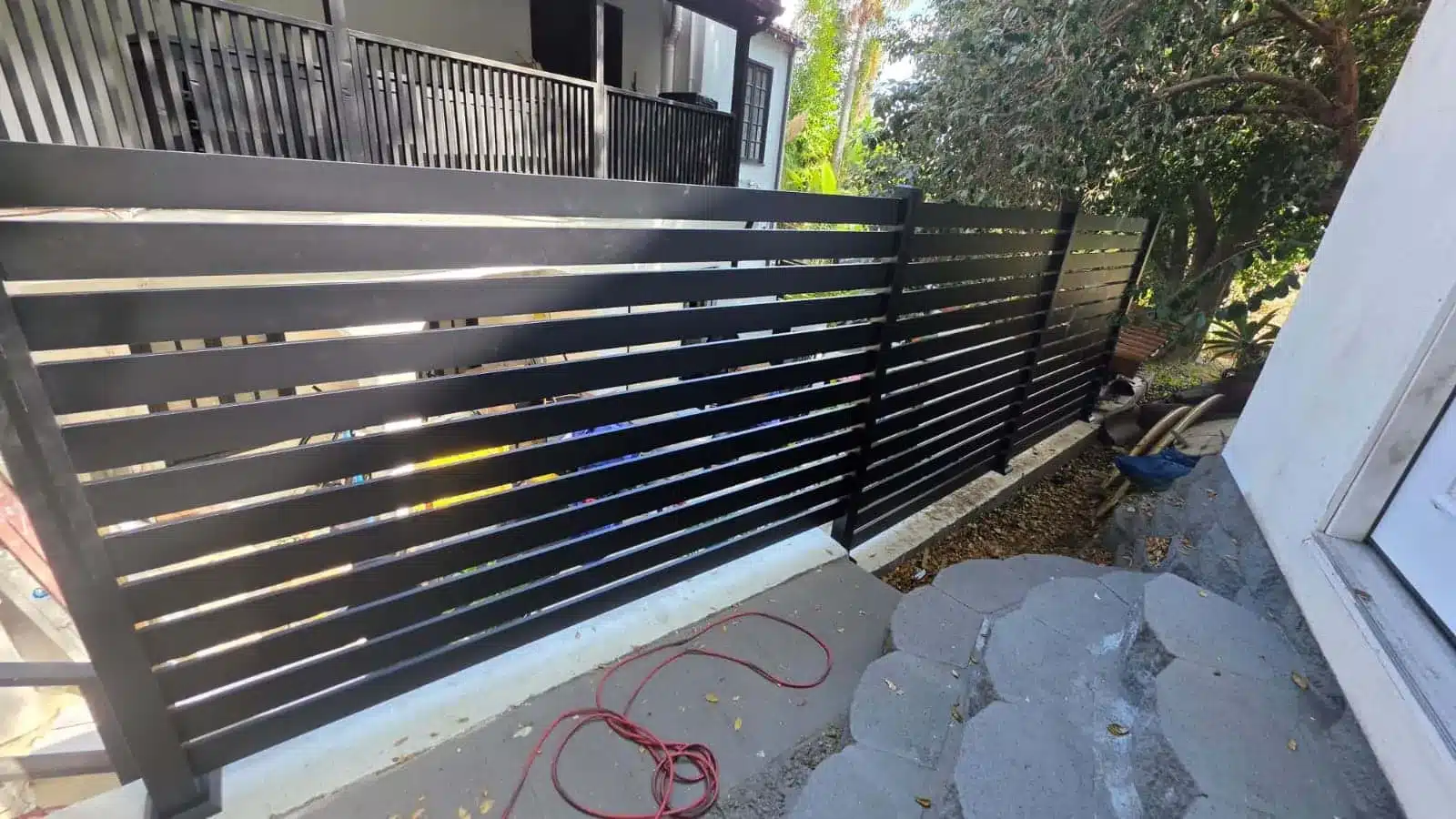
Aluminum used to mean open pickets, so many people still assume it cannot do privacy. That has changed. Modern horizontal slat systems give you a choice. Our Summit Series uses wide 6 inch slats for a near-solid face, the Linea Series overlaps its slats so there are no sightlines at all, and the Ventura Series angles louvers so neighbors cannot see in while air still moves. See all three on our aluminum privacy fence page.
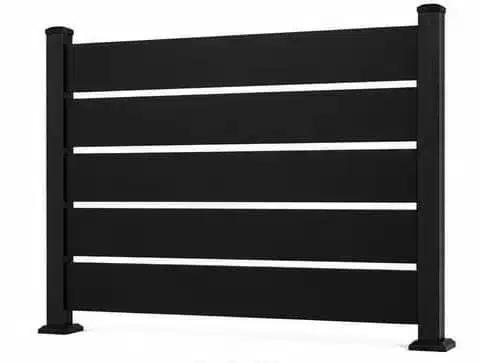
If you want a fence that frames a view instead of hiding it, around a pool, a front garden or a hillside, aluminum also does open styles, which vinyl does less gracefully.
Strength and durability
Aluminum is rigid. A ball, a ladder or a dog jumping at the fence will not crack it. A very hard hit, from a car or a fallen branch, can dent or bend a section, and that section can be replaced on its own.
Vinyl is flexible, which helps it shrug off light knocks, but the hollow boards can crack or split under a sharp impact, and they become more brittle when it is cold. Long runs of solid vinyl can also sag or lean over time if the posts are not reinforced. When a vinyl board cracks, it usually has to be replaced, since it cannot be patched invisibly.
Neither material rots, and neither is a meal for termites. That alone puts both ahead of wood for most homes.
Sun, heat and climate
In Southern California the sun is the real test of any fence. A quality powder-coated aluminum fence holds its color and finish for many years in full sun, and the metal does not soften or warp in heat.
Vinyl performance in the sun depends heavily on its UV protection. Good vinyl holds up well. Thinner or lower-grade vinyl can chalk, yellow or turn brittle after years of strong sun. Heat also explains why most vinyl comes in light colors: dark PVC absorbs more heat, which can make it expand and distort.
Near the coast, both materials resist salt air. Aluminum does not rust, and vinyl does not corrode. Lawn sprinklers are not a problem for either.

Style and color
Vinyl comes mostly in white, tan, gray and a few wood-look textures. The rails and posts are chunky, which suits traditional homes, farmhouse styles and classic picket fences.
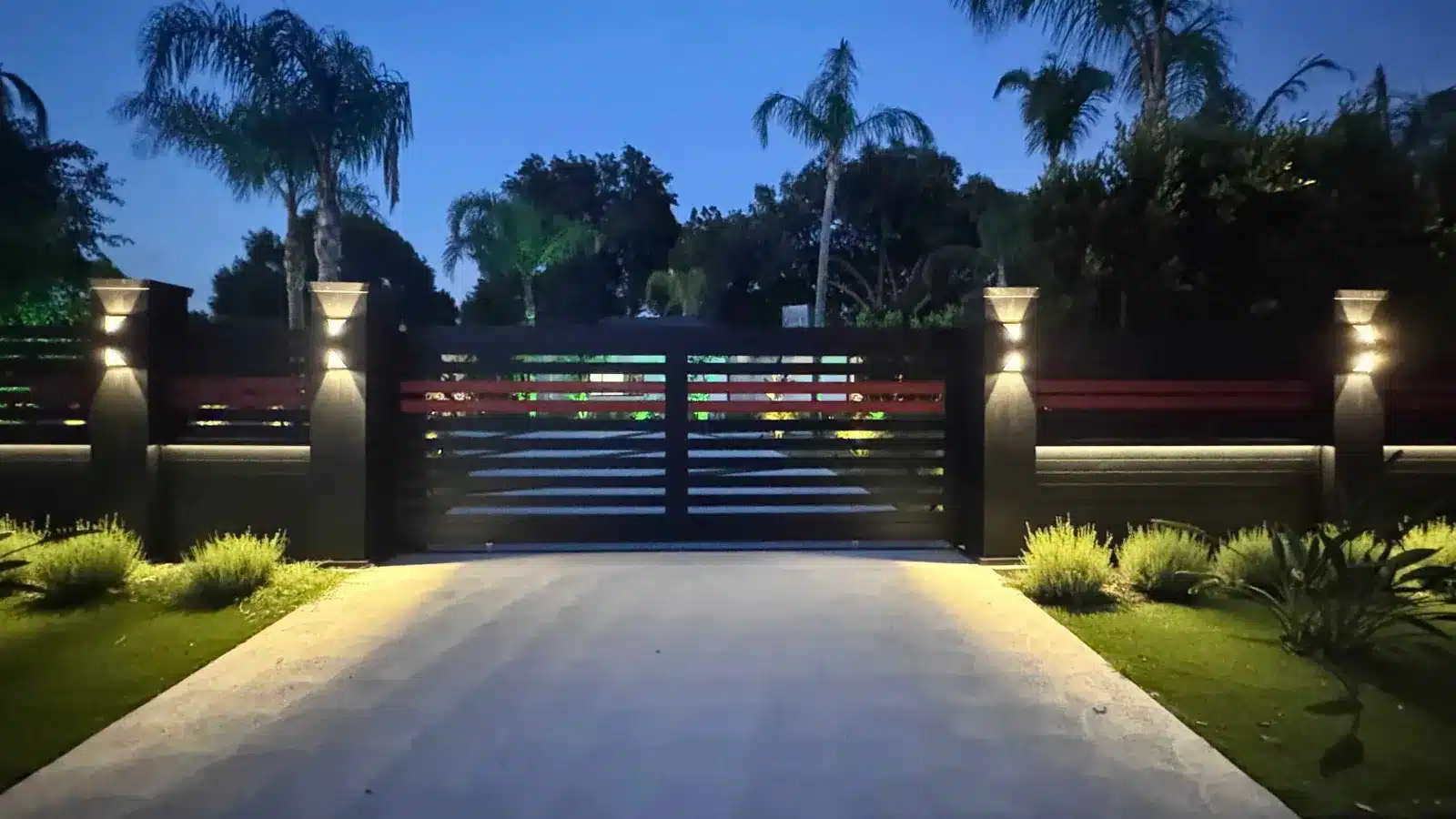
Aluminum reads as slimmer and more architectural. It comes in matte black, bronze and white, plus wood-grain finishes such as natural oak and walnut on the Linea Series. It suits modern, Spanish, Mediterranean and transitional homes, and it pairs well with matching gates and posts.
Is there black vinyl fencing?
Yes, though it is less common and usually costs more than white vinyl. Because dark PVC absorbs heat, black vinyl is often made with a special cap layer to limit fading and warping. If a black fence is the look you want, powder-coated aluminum is the more natural fit, since black is its most popular finish. Browse more ideas in our guide to aluminum fence styles.
Maintenance
Both fences are low maintenance compared with wood. Neither needs painting, staining or sealing.
Aluminum needs a rinse with a garden hose now and then, and a wipe with mild soap if dirt builds up. Avoid abrasive pads that could scratch the powder coat.
Vinyl also cleans with soap and water, but white vinyl shows everything: green mildew on the shady side, sprinkler marks and scuffs from lawn equipment. Expect to wash it more often to keep it bright.
Installation and sloped yards
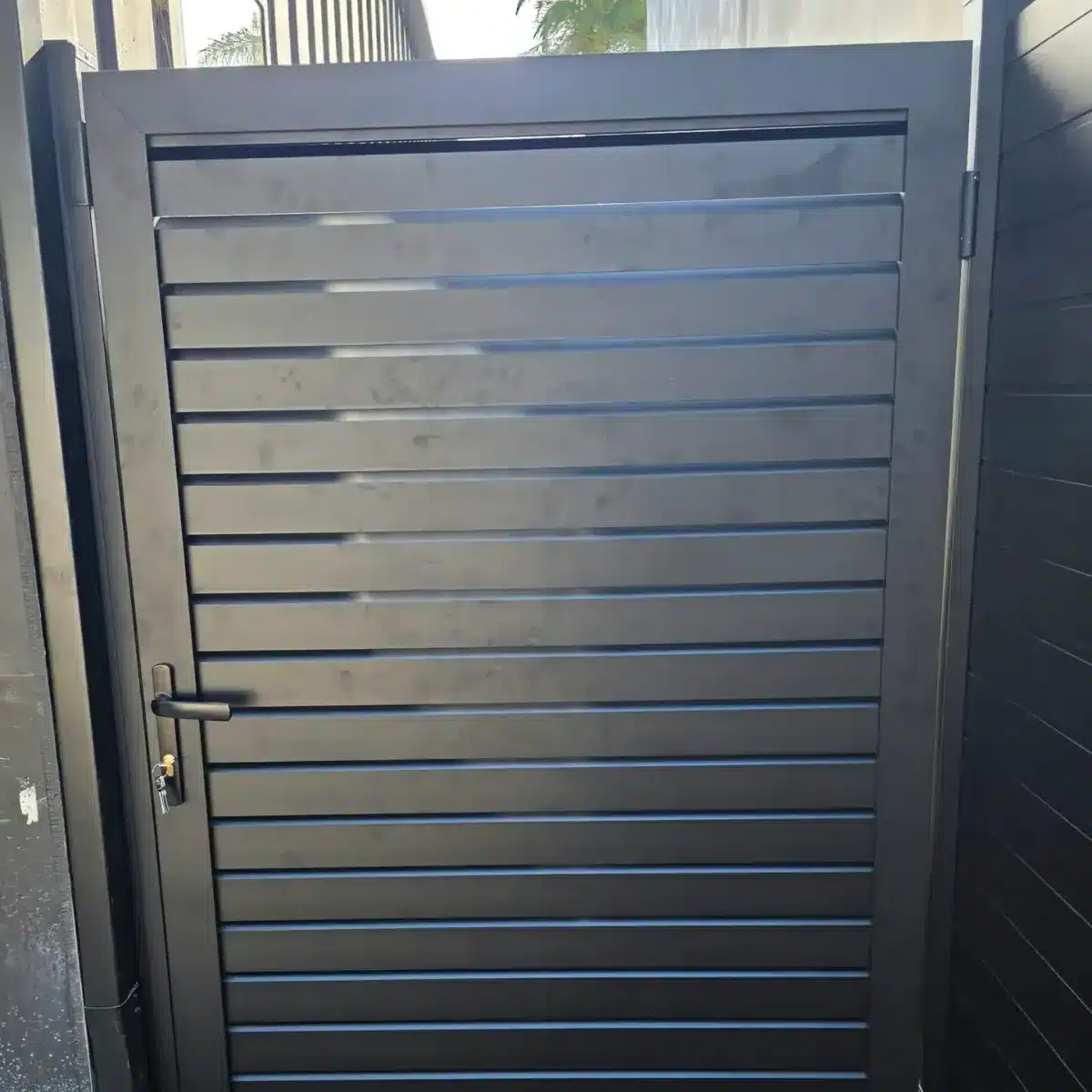
Aluminum panels are light, so they are easy to handle on site. Posts can be set in the ground in soil, or mounted to the surface on concrete, pavers or a block wall. On a sloped yard, horizontal aluminum panels are stepped down the grade so each panel stays level.
Vinyl panels are also light, though taller privacy panels can be bulky to move. Most vinyl systems are stepped on slopes too, and solid panels leave visible triangular gaps under each step that need to be filled or planted.
Cost
Which costs more, aluminum or vinyl? It depends on the style, height, total length, number of gates and the site itself. For a plain privacy fence, vinyl often starts lower up front in many markets. Ornamental and modern slat aluminum is usually priced higher than basic vinyl, but close to premium vinyl styles.
The bigger question is what the fence costs to own. A fence that cracks, sags or has to be replaced sooner costs more over time, even if it was less to install. Aluminum sections that get damaged can be swapped one at a time, and the finish does not need renewing. Vinyl also needs no painting, so both beat wood here. The difference comes down to impact damage and how well the vinyl you choose handles the sun.
For a quote on your exact fence line, send us your measurements through our quote request form.
Pets, pools and wind
Dogs
Solid vinyl blocks a dog’s view of the street, which can mean less barking. Aluminum privacy styles do the same. If you choose an open aluminum style for a small dog, check the gap between pickets or slats so it cannot squeeze through. Large dogs that jump at fences are more likely to crack vinyl than to damage aluminum.
Pools
Around a pool, many homeowners want to keep the water in view from the house, which suits open aluminum styles. Cities set their own rules for pool barriers, including height and how gates close and latch, so check with your local building department before you choose. See our aluminum pool fence page for styles and planning tips.
Wind
A solid vinyl panel catches wind like a sail, which puts strain on posts in gusty areas. Slatted and louvered aluminum lets air pass through, so it handles wind with less stress on the structure.
Pros and cons
Aluminum fence pros
- Will not rust, rot, crack or warp
- Powder coat holds its color in strong sun
- Choice of open, semi-private and full-privacy styles
- Slim, modern look in black, bronze, white and wood-grain finishes
- Damaged sections can be replaced one at a time
Aluminum fence cons
- Usually priced higher than basic vinyl
- Can dent under a very hard impact
- Open styles do not give privacy, so choose the style carefully
Vinyl fence pros
- Full privacy in a classic solid panel
- Often lower up front for a plain privacy fence
- No painting or staining
- Suits traditional and farmhouse homes
Vinyl fence cons
- Can crack or split on impact, especially when cold
- Lower grades can chalk, yellow or turn brittle in strong sun
- Limited dark colors
- White shows mildew and scuffs
- Solid panels catch wind
The verdict
Choose vinyl if you want a traditional solid privacy fence, prefer white or tan, and want the lowest starting price for a plain style.
Choose aluminum if you want a modern look, a dark or wood-grain finish, a fence that stands up to strong sun and knocks, or the freedom to mix open and private styles on the same property. With today’s slat and louver systems, you no longer have to give up privacy to get aluminum.
If you like the solid, wood-like look of vinyl but want a sturdier composite, ask about our WPC fence as well.
Questions to ask a supplier
Whichever material you choose, these questions separate a good fence from a disappointing one:
- What is the wall thickness of the slats, rails and posts?
- How is the finish applied? For aluminum, ask about the powder coat. For vinyl, ask about UV protection.
- Are the posts and rails reinforced for the height and length you need?
- Are there matching gates and posts in the same finish?
- What does the warranty cover, and for how long?
- Can I see it in person before I order?
See them side by side
The easiest way to decide is to stand in front of the panels. Our Panorama City showroom at 14600 Arminta St has our aluminum fence series, gates and posts on display. Visit Monday to Friday 8 to 5, or Sunday 10 to 4 by appointment, and bring your measurements and a few photos of your yard.
Ready to plan your fence? Request a quote or contact our team, and we will help you choose the right style for your property.
Professional installation, available through Lumina
Prefer to have your fence installed? Lumina can arrange professional installation through our licensed installation partner, Practic Vinyl Fencing Inc. (CSLB Lic. #1099109), so you can choose your style, gates and posts at the showroom and have the whole project handled from one place. Ask about installation when you request a quote, and share your site details, such as slopes, walls and gate openings, so we can plan it properly.
FAQ
Which is better, aluminum or vinyl fence?
For most modern homes, aluminum. It does not crack or warp, holds its color in strong sun, and comes in open and full-privacy styles. Vinyl is a good fit if you want a traditional solid white or tan privacy fence at a lower starting price.
Which costs more, aluminum or vinyl fencing?
For a plain privacy fence, vinyl often starts lower up front. Modern slat aluminum is usually priced higher, but close to premium vinyl. Over the life of the fence, aluminum can cost less to own because damaged sections are replaced one at a time and the finish needs no renewing.
Is vinyl fencing the same as PVC fencing?
Yes. Vinyl is the common name for PVC. Quality depends on wall thickness, UV protection and reinforcement, so two vinyl fences can perform very differently.
Is there black vinyl fencing?
Yes, but it is less common and usually costs more than white, because dark PVC absorbs heat and needs a protective cap layer. Black is the most popular finish for powder-coated aluminum, so aluminum is the more natural choice for a black fence.
Can an aluminum fence give full privacy?
Yes. Wide slat styles such as our Summit Series, overlapping slats such as the Linea Series and angled louvers such as the Ventura Series all block the view. Open picket styles do not, so choose the style for the privacy you need.
Is aluminum or vinyl better for dogs?
Both work. Solid vinyl and aluminum privacy styles block a dog’s view of the street. Large dogs that jump at a fence are more likely to crack vinyl. With open aluminum styles, check the gap between slats for small dogs.
Which holds up better in the California sun?
A quality powder-coated aluminum fence holds its color and shape in full sun. Vinyl depends on its UV protection: good vinyl holds up, while lower grades can chalk, yellow or turn brittle over time.
What are the downsides of an aluminum fence?
It is usually priced higher than basic vinyl, it can dent under a very hard impact, and open styles do not give privacy.
What are the downsides of a vinyl fence?
It can crack on impact, especially in cold weather, lower grades can fade or yellow in strong sun, dark colors are limited, and white vinyl shows mildew and scuffs.

Written by the Lumina Team
The Lumina Collection Group team works with homeowners, architects, contractors and dealers every day at our Panorama City showroom, helping them choose aluminum fence and gates, pergolas, privacy screens and turf for complete outdoor spaces.