
For generations, wrought iron was the fence that said a home was built to last. Today, more homeowners, architects and builders are choosing aluminum instead. Both are metal, both look refined, and from the street they can be hard to tell apart. Underneath, they behave very differently. This guide compares aluminum vs wrought iron fence on the points that matter when you live with a fence for twenty years: upkeep, strength, rust, style, weight and cost.
The short answer: for most homes, aluminum is the better fence. It does not rust, needs almost no upkeep, weighs a fraction of iron, typically costs less to buy and to own, and comes in modern styles iron cannot match. Wrought iron still makes sense in two situations: a high-security perimeter, or a historic restoration that calls for hand-forged ornament.
Key takeaways
- Aluminum wins for most homes: no rust, almost no upkeep and more styles.
- Aluminum costs less to own because it skips the sanding and repainting cycle iron needs.
- Iron is stronger, but that only matters for high-security perimeters.
- Near the coast, a pool or sprinklers, aluminum is the clear choice.
Aluminum vs wrought iron at a glance: aluminum wins 5 of 6
| Aluminum | Wrought iron | Winner | |
|---|---|---|---|
| Rust | Does not rust; powder coat protects the finish | Rusts when paint chips or wears | Aluminum |
| Maintenance | Occasional rinse | Periodic sanding, priming and repainting | Aluminum |
| Strength | Strong enough for homes, pools and driveways | Heavier and stronger | Wrought iron |
| Weight | Light; easier to handle and install | Very heavy; more labor and sturdier footings | Aluminum |
| Styles | Classic pickets plus horizontal slats, louvers, privacy and wood-look | Classic pickets, scrolls and forged ornament | Aluminum |
| Cost to own | Typically lower to buy and to maintain | Typically higher, plus repainting | Aluminum |
What is the difference between aluminum and wrought iron?
True wrought iron is iron that has been heated and worked into shape. Very little genuine wrought iron is made today; most fences sold as “wrought iron” are actually steel, fabricated in the same ornamental style. Either way, the material is dense, heavy and strong, and it rusts when exposed to moisture unless the paint is kept intact.
An aluminum fence is made from extruded aluminum profiles, the same family of material used in window frames and architectural facades. Quality fences use architectural-grade alloys such as T6063 and finish them in a baked-on powder coat. Aluminum is roughly a third of the weight of iron, and instead of rusting it forms a thin protective layer on its own surface.
Where ornamental steel fits
Ornamental steel sits between the two. It is what most “wrought iron” fences are made of today: strong, heavy and usually galvanized and powder coated to slow rust. It costs less than true forged iron, but it is still steel, so a deep scratch or a cut end can rust over time. If you like the look of iron but not the upkeep, compare steel and aluminum side by side before you decide.
Maintenance and rust: where aluminum wins clearly
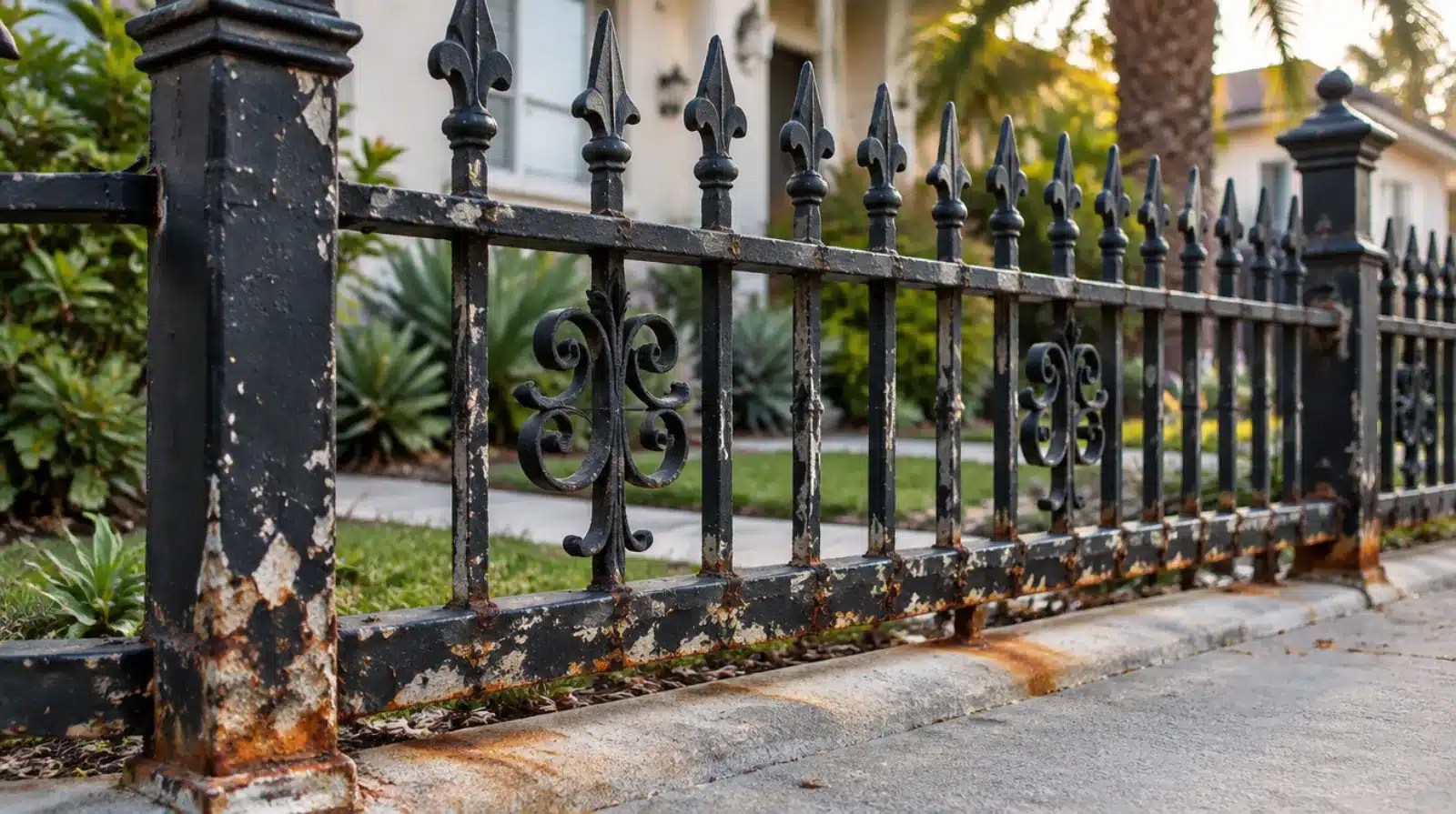
This is the biggest practical difference. Wrought iron and steel fences are only as good as their paint. Sprinklers, coastal air, pool splash and the morning dew all find any chip or scratch, and once rust starts it spreads under the paint and stains the surrounding finish. Owners of iron fences plan on sanding, priming and repainting every few years to keep them looking right.
Aluminum simply does not rust. A powder-coated aluminum fence keeps its color and finish with an occasional rinse, which is why it has become the default choice around pools, near the coast and anywhere irrigation hits the fence line. If you are fencing a pool, see our aluminum pool fence guide. Lumina aluminum fence panels are backed by a 25-year limited warranty against rust and discoloration.
Climate: why aluminum wins in Southern California
Where you live changes the answer. Salt air near the coast speeds up rust on iron and steel, and so does a fence line that sprinklers hit every morning. Pool water and pool chemicals splash onto the lower rails and posts, which is exactly where iron tends to fail first. In these settings aluminum is the safer long-term choice because there is no rust for the moisture to start.
Strong sun matters too. A good powder coat holds its color under years of Southern California sun, while painted iron tends to fade and chalk and needs repainting sooner. In dry inland areas with no irrigation on the fence, iron and steel hold up better, but they still need their paint kept intact.

Strength and security: iron is stronger, aluminum is strong enough
Wrought iron and steel are stronger and heavier. If the job is a high-security perimeter or a fence that must resist serious impact, iron and steel still have the edge. In practice, that difference matters for very few homes.
For residential property lines, side yards, front yards and pool areas, a properly specified aluminum fence is more than strong enough. The strength of an aluminum fence comes as much from its posts and how they are set as from the panels. Systems with heavy-wall posts cut for their own panels, like Lumina’s aluminum fence posts and columns, produce a rigid, straight run, and surface mount posts can anchor directly to a concrete patio or pool deck.
Style: aluminum offers far more choice
Wrought iron owns the classic look: tall pickets, finials, scrolls and custom forged detail. If you are restoring a historic home or want true hand-forged ornament, iron is hard to replace.
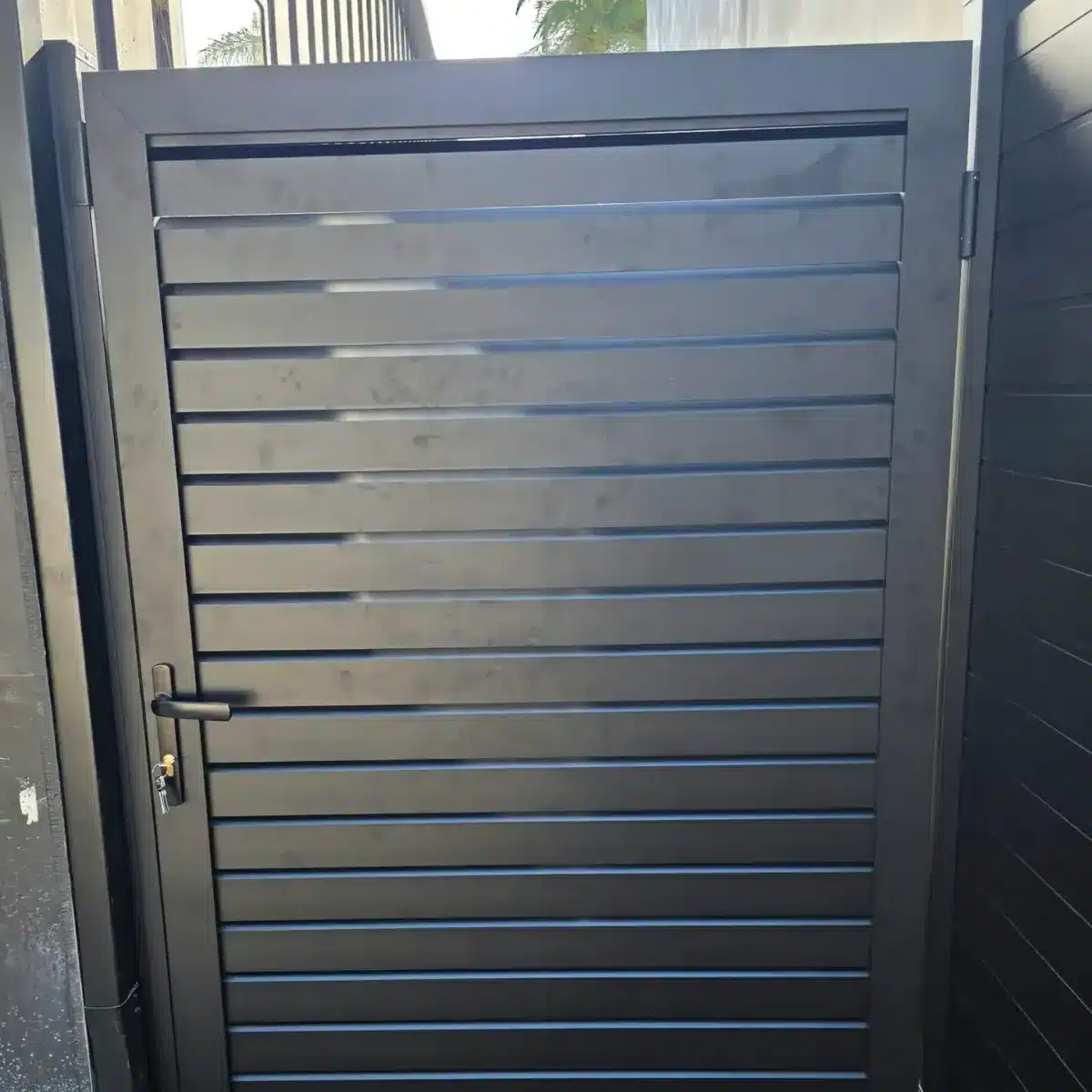
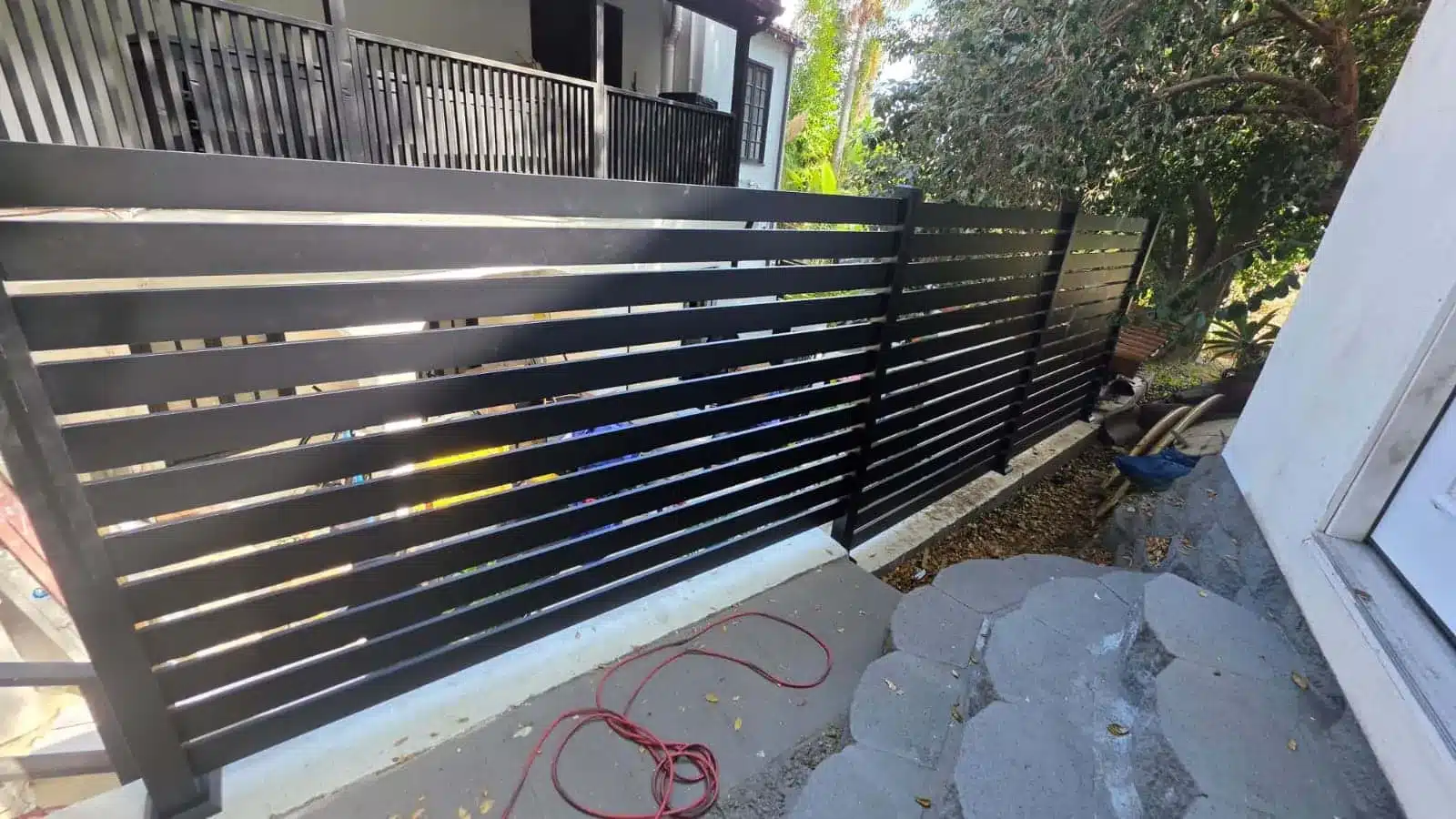
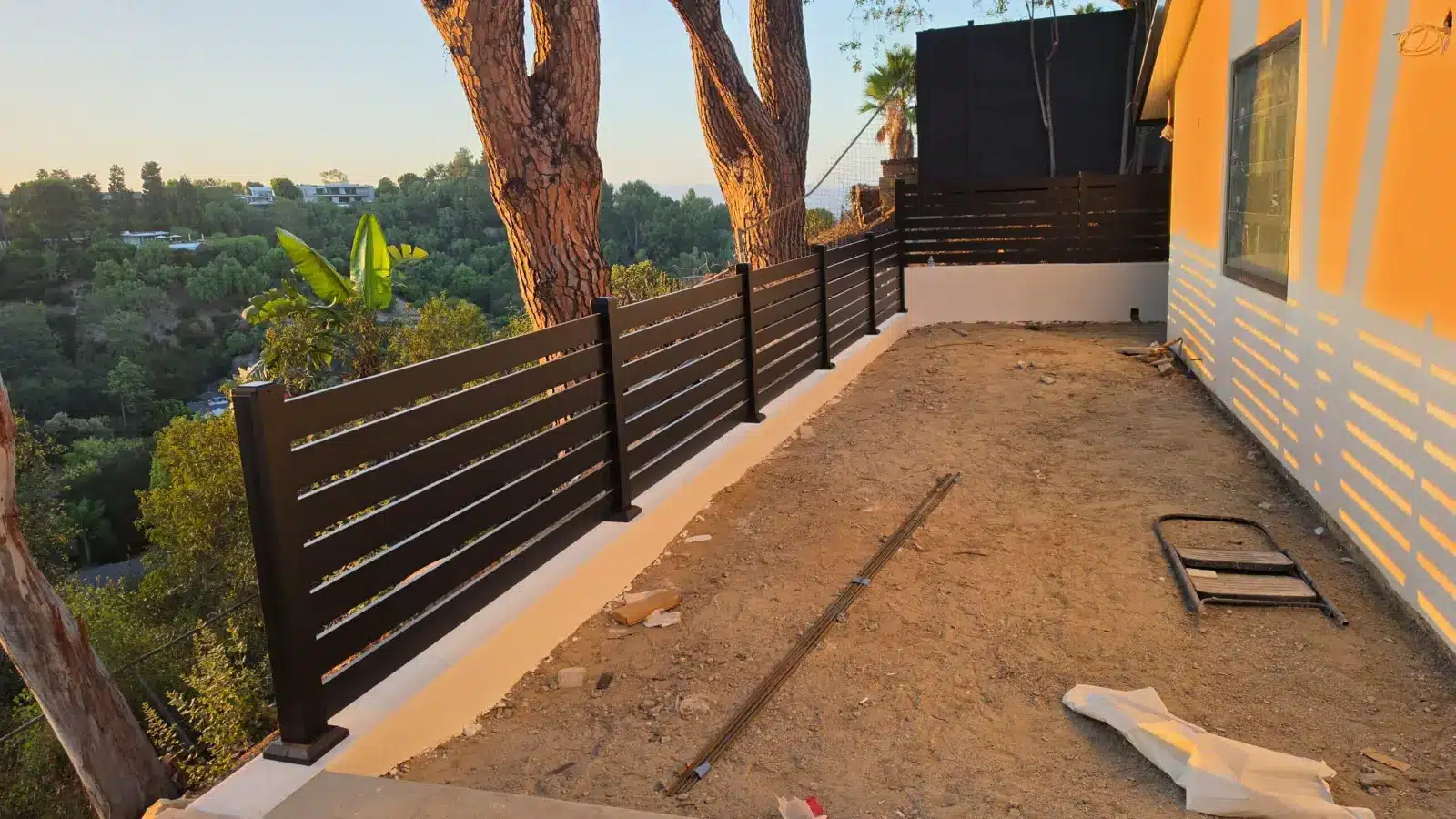
Aluminum covers the traditional picket look in matte black, but it also does something iron rarely does well: modern architecture. Contemporary California homes increasingly pair with horizontal and privacy profiles that would be impractically heavy in iron:
- Hampton: a horizontal aluminum fence with slim 2 inch slats.
- Ridgeline: bolder 4 inch slats that balance privacy and openness.
- Summit: a full aluminum privacy fence with wide 6 inch slats.
- Ventura: angled louvers that block the view but let air through.
- Linea: overlapping slats in oak and walnut wood-look finishes, plus black and white.


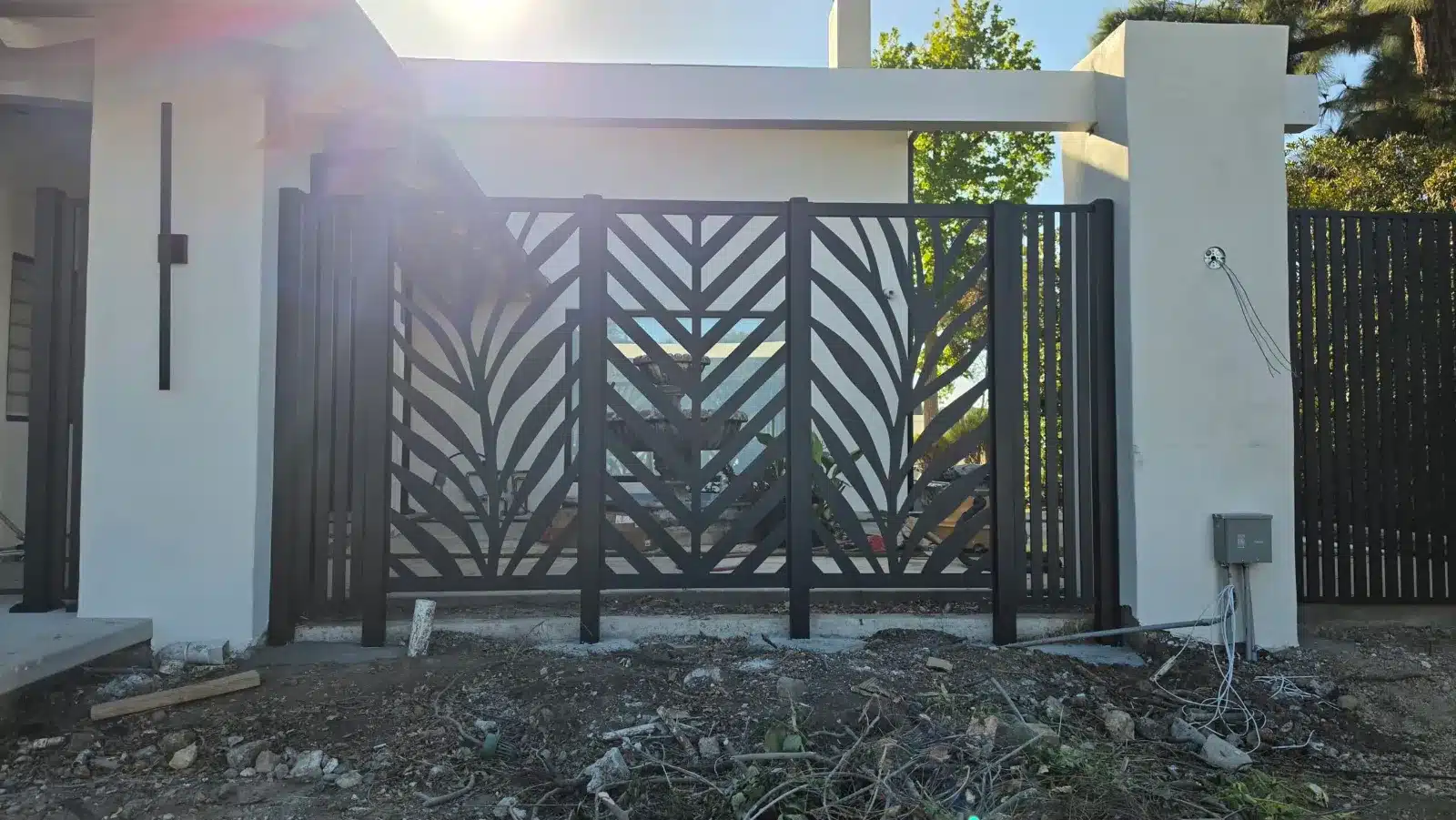
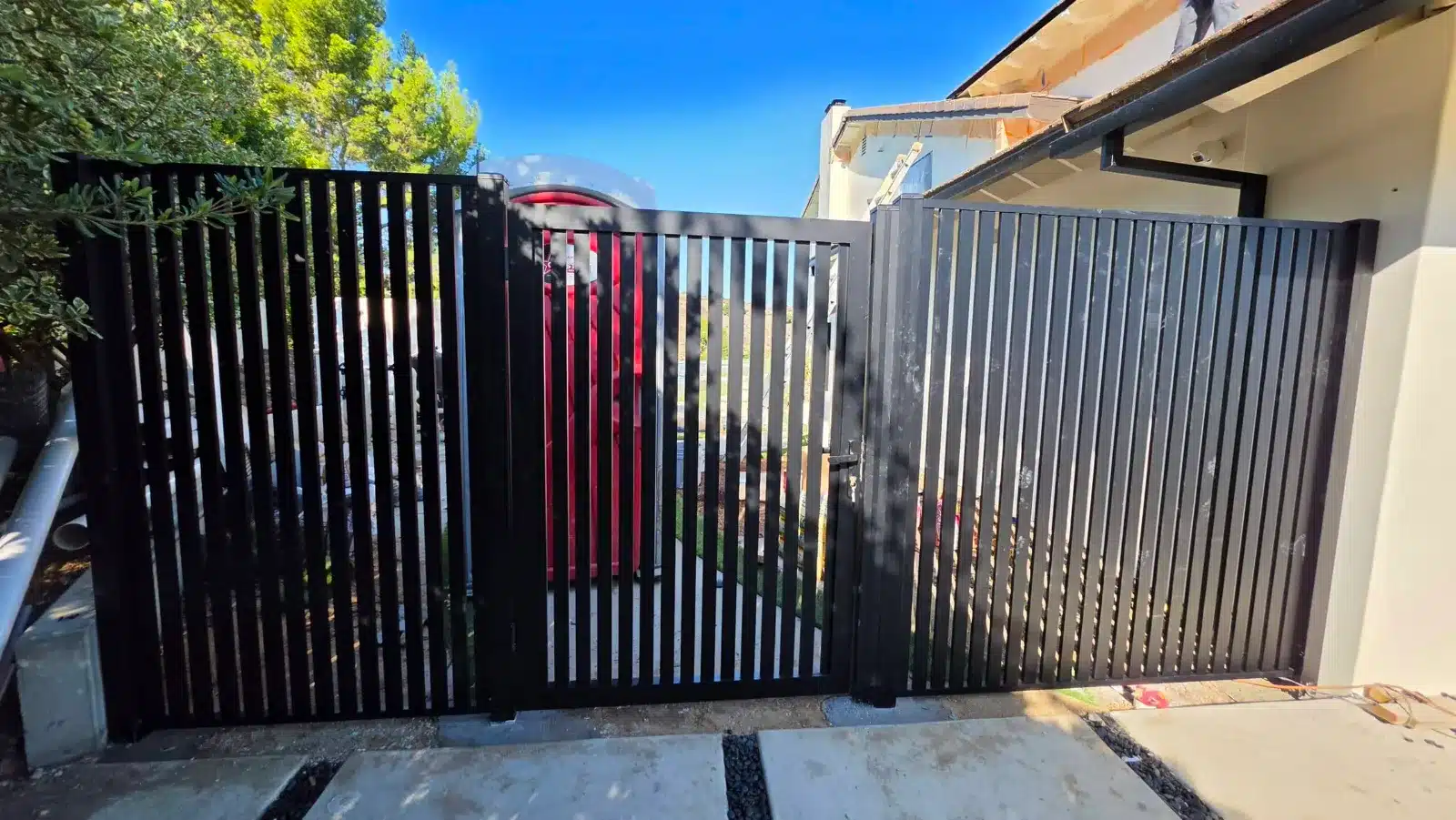
Every profile has matching aluminum gates, so a pedestrian gate or a sliding driveway gate continues the same line across the opening.
Weight and installation: aluminum is easier on everything
Iron is heavy. Panels need more people to move, deeper or larger footings and sturdier hinges, and long gates put more strain on posts over time. Aluminum’s light weight makes panels easier to handle, puts less load on gate hardware and makes long sliding gates easier to operate. For contractors, that usually means a faster, simpler job.
Installing on a sloped yard
On a sloped yard, metal fence panels are either stepped, so each panel sits level and drops down the hill in stages, or racked, so the rails follow the grade. Iron can be custom fabricated to a slope but adds cost and weight. With aluminum, the method depends on the series and how steep the grade is, so share your measurements and photos of the slope when you request a quote and we will recommend the right approach.
Wrought iron vs aluminum fence cost
Aluminum is typically less expensive than true wrought iron, and the gap widens over time because aluminum skips the repainting cycle. Custom forged iron is the most expensive option of all. The real cost of either depends on height, style, the number and size of gates and the length of the run, so the most useful comparison is a quote for your specific project. You can request a quote from Lumina with your lengths and gate positions.
When you compare quotes, look at the cost of ownership, not just the first invoice. An iron fence carries a repainting cycle for as long as you own it: labor, primer, paint and rust repair, every few years. A powder-coated aluminum fence has none of that. Ask any supplier about wall thickness, post size and warranty as well, because a thin-wall fence that looks similar on paper will not perform the same over twenty years.
What owning each fence looks like over 20 years
The purchase is a single day. Living with the fence is twenty years. This is what the upkeep typically looks like for each material:
| Aluminum fence | Wrought iron fence | |
|---|---|---|
| Year 1 | Install and enjoy | Install and enjoy |
| Years 2–5 | Rinse when dusty | Touch up chips before rust spreads |
| Years 5–10 | Rinse when dusty | Sand, prime and repaint; treat rust at the base of posts |
| Years 10–20 | Same finish, same color | Repaint again; replace rusted sections or pickets as needed |
By year ten, most iron fences have been repainted at least once. A powder-coated aluminum fence looks much the same as the day it went in.
Aluminum vs wrought iron fence: pros and cons
Aluminum fence pros
- Does not rust, even near the coast, pools and sprinklers
- Almost no maintenance beyond an occasional rinse
- Light, so panels are easier to handle and gates put less strain on posts
- Classic picket styles plus modern horizontal, louvered, privacy and wood-look profiles
- Typically lower cost to buy and to own
Aluminum fence cons
- Not as strong as solid iron or steel under heavy impact
- Can dent or bend if hit hard by a vehicle or heavy equipment
- Less suited to one-off, hand-forged ornament
- Quality varies widely between manufacturers, so wall thickness and coating matter
Most of these weak points come down to the system you choose. Heavy-wall posts sized for their panels, a quality powder coat and a real warranty close most of the gap. Lumina aluminum fence panels carry a 25-year limited warranty against rust and discoloration.
Wrought iron fence pros
- The strongest and heaviest option for high-security perimeters
- Authentic forged look, ideal for historic restorations
- Can be custom fabricated with scrolls and detailed ornament
Wrought iron fence cons
- Rusts wherever paint chips or wears
- Needs regular sanding, priming and repainting
- Very heavy, which adds labor and strain on gates and posts
- Typically the most expensive option, especially for custom work
- True wrought iron is rarely made today; most is steel
The verdict: aluminum for most homes
For a front yard, side yard, backyard, pool area or driveway, aluminum is the better fence for almost every homeowner. It gives you the look of metal without the upkeep of metal.
Choose aluminum if
- You want a metal fence that will not rust, especially near the coast, a pool or sprinklers.
- You would rather rinse a fence than repaint it.
- You want a modern look: horizontal slats, louvers, full privacy or wood-look finishes, or a classic black picket.
- You are fencing a pool area, patio or deck and want posts that mount to concrete.
- You want matching gates, including sliding driveway gates, in the same style.
Wrought iron still makes sense if
- You need maximum strength for a high-security perimeter.
- You are restoring a historic property and need authentic hand-forged ornament.
Questions to ask any aluminum fence supplier
Not every aluminum fence is equal. Before you choose, ask:
- What is the wall thickness of the posts and rails? Heavier walls make a straighter, more rigid fence.
- Are the posts made for these panels? Posts cut for their own panels fit cleanly and stay aligned.
- What is the finish? Look for a baked-on powder coat, not paint.
- What does the warranty cover, and for how long? Ask about rust and discoloration specifically.
- Are there matching gates and surface mount posts? You will need both for most projects.
- Can I see it in person? Finish and slat width are hard to judge on a screen.
See them side by side
Finish, slat width and color are hard to judge on a screen. At the Lumina showroom in Panorama City you can see every aluminum fence series side by side, swing the gates and compare finishes in daylight before you decide. Visit Monday to Friday, 8 to 5, or Sunday by appointment, or contact us to plan your project. Contractors and dealers can also open an account through our trade and wholesale program.
Already leaning toward aluminum? See 12 modern aluminum fence styles for design ideas, from black horizontal slats to louvered and wood-look panels.
Professional installation, available through Lumina
Prefer to have your fence installed? Lumina can arrange professional installation through our licensed installation partner, Practic Vinyl Fencing Inc. (CSLB Lic. #1099109), so you can choose your style, gates and posts at the showroom and have the whole project handled from one place. Ask about installation when you request a quote, and share your site details, such as slopes, walls and gate openings, so we can plan it properly.
Frequently asked questions
Is aluminum or wrought iron fence better?
For most homes, aluminum is better. It does not rust, needs almost no maintenance, costs less to own and comes in more styles. Wrought iron is the better choice only when you need maximum strength for a high-security perimeter or authentic forged ornament for a historic home.
Is aluminum fence as strong as wrought iron?
Not quite. Solid wrought iron and steel are heavier and stronger, which is why they are still chosen for high-security perimeters. For most homes, a well-built aluminum fence with proper posts is more than strong enough to define a property line, screen a yard and secure a pool area or driveway.
Does aluminum fence rust?
Aluminum does not rust the way iron and steel do. A powder-coated aluminum fence holds its finish without the sanding and repainting iron needs, which is why it is popular near the coast and around pools and sprinklers.
Which costs less, aluminum or wrought iron?
Aluminum is typically less expensive than true wrought iron, both to buy and to maintain over the life of the fence. Exact cost depends on the style, height, gates and length of the run, so the best way to compare is a quote for your specific project.
Can aluminum fence look like wrought iron?
Yes. Many aluminum fences use a traditional picket and rail look in matte black that reads like iron from the street. Modern aluminum also comes in styles iron rarely offers, such as horizontal slats, louvers, full-privacy panels and wood-look finishes.
Which lasts longer, aluminum or wrought iron?
Both can last decades. The difference is upkeep: wrought iron lasts as long as its paint is maintained and rust is kept in check, while powder-coated aluminum needs little more than an occasional rinse. Lumina aluminum fence panels carry a 25-year limited warranty against rust and discoloration.
What are the disadvantages of an aluminum fence?
Aluminum is not as strong as solid iron or steel, and it can dent or bend if it takes a hard hit from a vehicle or heavy equipment. It is also less suited to one-off hand-forged ornament. Quality varies between manufacturers, so check wall thickness, post size, the powder coat and the warranty before you buy.
Why is wrought iron no longer used?
Genuine wrought iron is labor intensive and costly to produce, so very little is made today. Most fences sold as wrought iron are ornamental steel made in the same style. Many homeowners who want that look now choose aluminum or steel because they cost less and, in the case of aluminum, do not rust.
Which is better, wrought iron or cast aluminum?
Cast aluminum is poured into molds and is often used for decorative posts, finials and ornament. It gives an iron-like look without rust and with far less weight. Wrought iron is stronger and better for custom forged work and high-security fencing. For most residential fences, extruded aluminum panels with cast or matching accessories are the practical choice.
Do aluminum fences increase property value?
A well-kept fence improves curb appeal, defines the property and adds privacy and security, which buyers notice. Because aluminum does not rust and needs little upkeep, it tends to keep looking new for years. How much any fence affects value depends on the home and the local market.

Written by the Lumina Team
The Lumina Collection Group team works with homeowners, architects, contractors and dealers every day at our Panorama City showroom, helping them choose aluminum fence and gates, pergolas, privacy screens and turf for complete outdoor spaces.